
-
Spottswoode Lyndenhurst Cabernet Sauvignon 2019
Regular price €107,95 EURRegular priceUnit price per
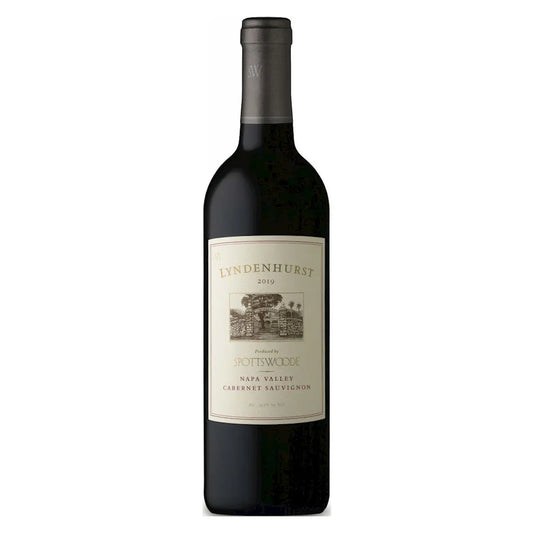
Napa Valley lies in California and stretches roughly 34 miles northward from San Francisco Bay to the foot of Mount St. Helena, with Sonoma Valley to the west and Lake Berryessa to the east. It is a surprisingly compact valley, but the terroir is anything but uniform. The climate ranges from the cool, fog-laden Carneros district near the bay to the warmer areas to the north and in Pope Valley, and the valley floor rises from just 17 feet above sea level at Napa to around 400 feet at Calistoga. That variation lets growers match grapes and vineyards with great precision.
The history reaches back to 1838, when George Yount planted the first vines near present-day Yountville. When Samuel Brannan set out European cuttings across a larger area in 1859, development really took off, and within twenty years the area held 18,000 acres of vineyards. Today you find everything from large, technologically advanced wineries to smaller boutique producers working more traditionally with a few select modern touches.
Napa Valley's reputation rests first and foremost on Cabernet Sauvignon and Chardonnay, counted among the region's most sought-after wines. The east-facing slopes, with their gravelly, well-drained soil, favor the red grapes, while the west-facing ones lean toward white varieties thanks to the afternoon shade. Beyond the two flagships, others grown here include Merlot, Pinot Noir, Sauvignon Blanc, Chenin Blanc, White Riesling and Zinfandel, supplemented by secondary grapes such as Cabernet Franc, Petite Sirah, Syrah and Barbera.
At Copenhagen Wine we currently carry a single wine from Napa Valley, so the selection is focused rather than broad. If you want to explore more American wine, you can follow the link to our collection from the U.S.A., and if it is the grape itself that draws you, you will find more styles under Cabernet Sauvignon. Napa is a good place to start if you would like to understand how microclimate and soil shape a wine's expression.