
-
 93 POINTSOrganic
 Italian agriculture
IT-BIO-006
Italian agriculture
IT-BIO-006
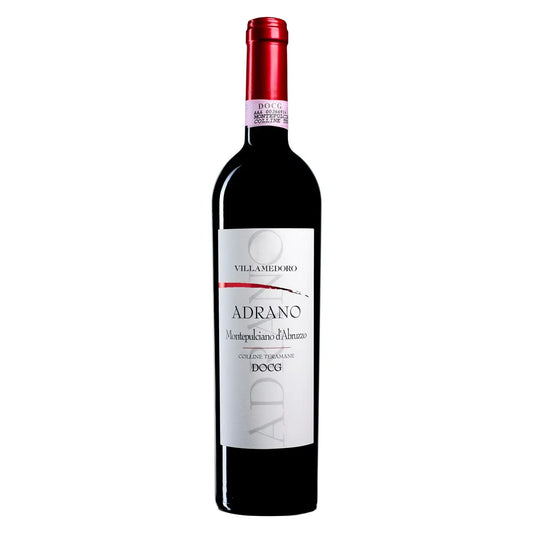
Villa Medoro Montepulciano d'Abruzzo Adrano Colline Teramene DOCG 2013
Regular price €32,95 EURRegular priceUnit price per
Montepulciano d'Abruzzo Colline Teramane DOCG is one of the most interesting classifications in Abruzzo, the region in central Italy. The designation was created in 1995 and elevated to DOCG, Italy's highest quality classification, in 2003. It covers Montepulciano d'Abruzzo made from grapes grown within a defined area near Teramo, and every bottle in this category comes from exactly there. So when you choose a wine on this page, the origin is fixed by law and not a random choice among many places.
The idea behind the classification is worth knowing. It was created to set the northern montepulcianos apart from those made in the southern part of the region, thereby giving the wines from the Teramo area their own identity and recognition. It is this north/south distinction that is the whole rationale behind the subzone.
Montepulciano is the wholly dominant grape, but the wines need not be made exclusively from it. The rules allow a smaller proportion of Sangiovese (up to 10 percent) to be blended in. This gives the winemaker a little freedom to fine-tune the balance, while the character is still clearly carried by Montepulciano.
Like most Italian quality classifications, the DOCG designation sets requirements all the way from vineyard to bottle. These include the geographical origin, the cultivation, the vinification and a period of ageing before the wine may be sold. Each wine must also pass an inspection before it may bear the designation Colline Teramane DOCG.
At Copenhagen Wine we carry this category from Abruzzo, and if you are fond of Italian red wines with a clear sense of place and a solid quality framework behind them, Montepulciano d'Abruzzo Colline Teramane DOCG is a good place to begin. It is a designation that tells you precisely where in Italy the wine comes from, and which tradition it stands on.