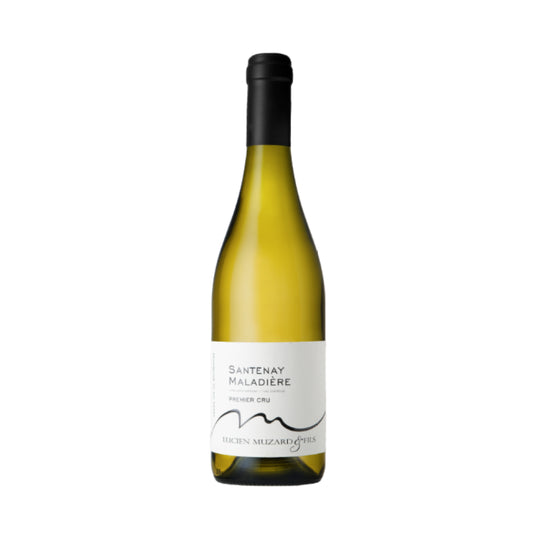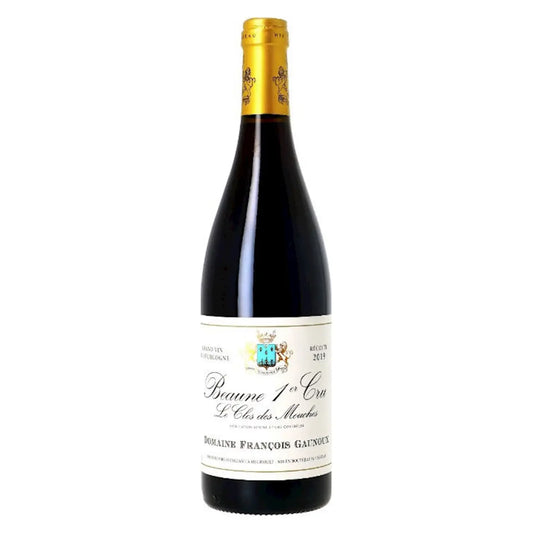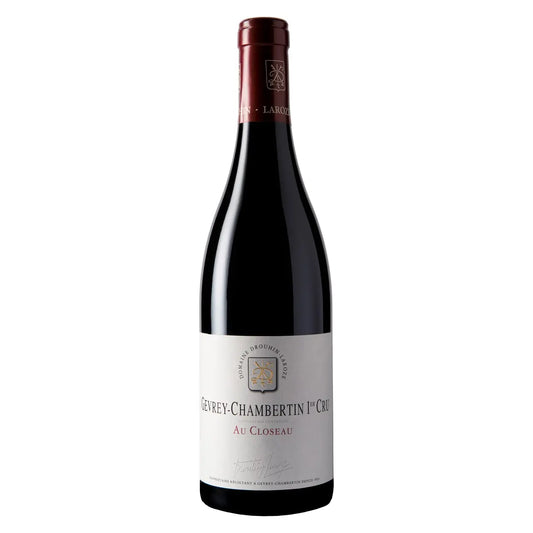

Welcome to the first part of our series The great wine regions. We begin in one of the places that has shaped the entire wine world's understanding of what a single grape can express when soil, climate and the human hand play together: Bourgogne in eastern France.
If you already drink wine with curiosity and would like to understand it a little better, Bourgogne is a rewarding place to dive in. Here it is not about big blends, but about two grapes, a finely meshed landscape and a classification system that rewards anyone willing to dig a spade's depth deeper.
What you will learn
- Which grapes and which geography define Bourgogne
- How the classification hierarchy from regional to Grand Cru fits together
- The most important sub-areas from north to south
- What you can typically expect to taste in the glass
Bourgogne in brief
Bourgogne stretches like a long ribbon through eastern France, from Chablis in the north (geographically actually closer to Champagne than to the centre of the region) and all the way down to Beaujolais in the south. It is a region built on terroir, that is, the idea that a particular piece of soil, its subsoil, its slope and its microclimate leave a recognisable imprint in the wine.
One important thing to understand is how divided up Bourgogne is. Before the French Revolution the church owned the majority of the vineyards, but they were confiscated and parcelled out, and inheritance law has since divided the plots into ever smaller pieces. Today one and the same classified vineyard can be shared between many different growers. That explains why two wines from the same named vineyard can taste different: they come from different hands.
To make trade and distribution work in such a fragmented landscape, a system of négociants grew up from the 1700s, that is, trading houses that bought grapes or wine and brought it out into the world. Today an ever larger share of the finest wines is bottled at the individual domaines, but the négociant tradition remains a part of the region's DNA.
Grapes and styles
Bourgogne is first and foremost the homeland of two grapes. Pinot Noir is responsible for the classic red wines, and Chardonnay for the whites. Both grapes are considered relatively neutral in themselves, which is precisely part of their charm here: they act as a transparent canvas on which the soil, the vintage and the cellar work are allowed to speak.
Pinot Noir typically gives lighter, more translucent red wines with fine tannin (the slightly astringent substances from skins and pips) and an aromatic profile that revolves around red berries and an earthy, spicy undertone. Chardonnay spans broadly: from the razor-sharp and mineral in the north to the fuller and more buttery further south, often depending on whether the wine has seen oak barrels.
Towards the south you also encounter Gamay, the grape behind Beaujolais. These are light, fruity red wines with a completely different style from the powerful reds known from Rhône a little further down. Beaujolais actually makes up around half of all of Bourgogne's total production, even though stylistically it stands on its own.
A word about barrel ageing
When Chardonnay is laid in oak barrels for some months, the wood can contribute notes of vanilla, toasted bread and a softer texture. Many of the region's white wines also undergo malolactic fermentation, a process that converts the sharp malic acid into a softer lactic acid and gives a more creamy expression. These are two of the moves that explain why two Chardonnays can taste so different.
From regional to Grand Cru
Bourgogne's classification is built around the soil, not around the producer, and it can be thought of as a pyramid with four levels.
- Regional: The broadest appellations, often labelled as Bourgogne. The grapes can come from a larger area, and the wines are typically the most accessible starting point.
- Village: Wines from a particular village, bearing the village's name. Here the local character begins to come through more clearly.
- Premier Cru: Named single vineyards within a village, which historically have proven particularly well suited.
- Grand Cru: The top of the pyramid, a small handful of the most esteemed vineyards, often sold under the vineyard's own name.
The higher up the pyramid, the more specific the origin becomes, and the smaller the quantity. Côte de Nuits and Côte de Beaune together account for less than a tenth of the region's total production, and it is precisely here that many of the most classic and sought-after wines live. It is also at the highest levels that the vast majority is today bottled directly at the domaines.
How the wines taste
It makes good sense to go from north to south, because the style changes along the way.
In Chablis furthest to the north you find crisp, fresh white wines of Chardonnay, often with a taut, almost salty minerality and a cool acidity. This is Chardonnay in its most pure and unsmoothed form.
Côte de Nuits is historically the home of the great red Bourgognes of Pinot Noir. Here the wines can have both finesse, depth and the ability to develop over time.
Côte de Beaune is, conversely, famous for its white wines of Chardonnay, although the area also makes fine reds. This is often where you find the fuller, oak-influenced whites.
Further south, Côte Chalonnaise gives both red and white wines in a style reminiscent of Côte de Beaune, but in a slightly less classic version and typically more straightforward. Mâconnais is primarily known for white wine, with Pouilly-Fuissé as its most esteemed appellation. And furthest to the south stands Beaujolais with its light, fruity Gamay reds in a category of its own.
In brief
- Bourgogne stretches from Chablis in the north to Beaujolais in the south and is built on the idea of terroir.
- The two cornerstone grapes are Pinot Noir (red) and Chardonnay (white), with Gamay in Beaujolais.
- The classification goes from regional via village and Premier Cru to Grand Cru, and is about the soil.
- Vineyards are heavily divided between many growers, which explains the great variation.
- The style shifts from razor-sharp Chablis in the north to fuller whites in Côte de Beaune and light reds in Beaujolais.
Frequently asked questions
What is the difference between a village wine and a Premier Cru?
A village wine comes from a particular village and bears its name, while a Premier Cru originates from a named single vineyard within the village, which historically has proven particularly well suited. Premier Cru is thus a more specific and typically rarer level.
Why do two Bourgognes from the same vineyard taste different?
Because one and the same classified vineyard is often shared between many different growers. Differences in cultivation, time of harvest and cellar work, for example the use of barrels and malolactic fermentation, leave their own imprint.
Ready for the next step?
Now you have a map of Bourgogne in your head: the grapes, the geography and the pyramid from regional to Grand Cru. The best way to get to know it is to taste your way through it, ideally from north to south, and feel how the style changes.
In the next part we travel west to Bordeaux: the masters of the blend, where the philosophy is a completely different one, namely the art of putting several grapes together. Do drop by the selection along the way and let curiosity be your guide. And remember that the best pairing is always the wine you like, with the food you fancy.