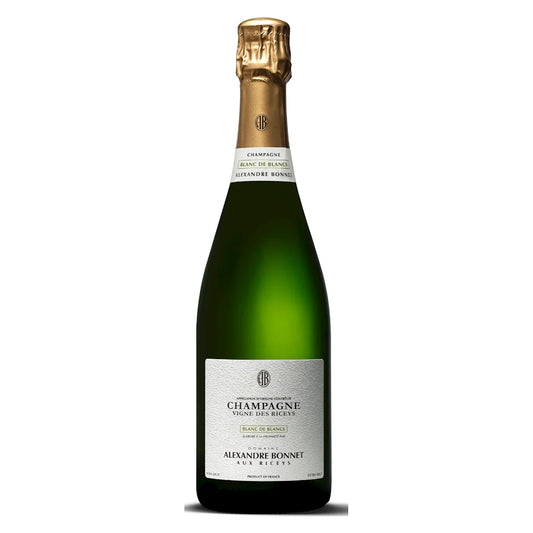

Welcome to the third part of our series The Great Wine Regions. After our tour through Bourgogne and Bordeaux, we move further north in France, to the region that for most people is the very embodiment of celebration and bubbles: Champagne.
Here we take a closer look at what makes Champagne something special. It is about a cool northern French geography, a chalk-rich subsoil, a handful of grapes and a production method that lets the wine develop its bubbles in the bottle itself. Let us pour a glass and dive in.
What you will learn
- Where Champagne is located, and which grapes are used
- How the traditional method works, briefly explained
- What terms like brut, non-vintage and vintage mean
- What characterises the taste of a Champagne
Champagne in brief
Champagne is France's northernmost wine region and lies around ninety miles north-east of Paris. The climate is cool and damp, shaped by the Atlantic, with a real risk of frost in spring. In many ways it is a borderline region for viticulture, and that very challenge is part of the explanation for the wines' fresh, crisp character.
The truly decisive feature lies in the subsoil. Beneath a thin layer of soil you find a thick layer of porous chalk, formed millions of years ago. The same chalk layer extends all the way to the white cliffs at Dover. The chalk drains well, holds moisture in dry periods and gives the wines a particular mineral freshness.
The vineyards lie on gently rolling slopes with east- and south-east-facing inclines, which helps the grapes ripen in the cool climate. The region is divided into several districts, including Montagne de Reims, Côte des Blancs and Vallée de la Marne. Worth knowing: only sparkling wine made within the demarcated Champagne area may legally call itself Champagne in the EU.
Grapes and the traditional method
Champagne is built on three main grapes. Chardonnay is the white grape that brings finesse, freshness and citrus character. Pinot Noir and Pinot Meunier are both dark grapes that contribute body, fruit and structure. The fact that you can make pale, sparkling wine from dark grapes is because the grapes are pressed gently and the juice is kept away from the colour-giving skins.
A cornerstone of Champagne is assemblage, that is, the art of blending. Most Champagnes are put together from several grapes, several vineyards and often several vintages. Reserve wines from earlier years are an important part of most blends and help ensure a recognisable style year after year.
Méthode champenoise in broad strokes
The traditional method, méthode champenoise, is what creates the bubbles. First you make a perfectly ordinary, still base wine. Then comes the decisive part: a second fermentation takes place in the very bottle in which the wine is later sold. When you add a little sugar and yeast to the finished wine and seal the bottle, the yeast converts the sugar into alcohol and carbon dioxide. The carbon dioxide cannot escape and is therefore bound into the wine as the fine bubbles.
After fermentation, the wine matures on its own yeast deposit, the so-called lees, for a period. This is where many Champagnes gain their characteristic notes of bread, brioche and toasted nuts. Finally the lees are removed, the sweetness is adjusted if necessary, and the bottle is closed for good.
It is a time-consuming craft. The grapes are harvested by hand, and machine harvesting is not permitted. Pressure and finesse go hand in hand: in a finished bottle there is considerable pressure and millions of tiny bubbles.
Styles and terms
When you hold a Champagne in your hand, the label tells you a great deal about what you can expect.
Sweetness level is most often indicated as brut, which is the dry and most widespread style. There are also even drier versions and slightly sweeter variants, but brut is what most people encounter first.
Non-vintage (often abbreviated NV) is the classic blend of several vintages. Here the aim is a consistent house style rather than the character of a particular year. Non-vintage matures for a period after the harvest before it may be sold.
Vintage (vintage Champagne) is made only from grapes of a single, often especially good, year. It matures longer than non-vintage and typically has more depth and complexity.
You will also come across Blanc de Blancs, made exclusively from white grapes (Chardonnay) and often crisp and elegant, as well as Blanc de Noirs, made from dark grapes and with more body and fruit. Rosé Champagne is also a style in its own right, with its pink colour and a little more berry character.
One last thing to know: behind the terms hide very different players. A large number of smaller grape growers own the majority of the vineyards, while a more limited number of houses account for the bulk of sales. This gives a broad range of styles to explore.
How the wines taste
The typical Champagne is first and foremost fresh. The cool climate gives a lively acidity that makes the wines crisp and inviting. On top of that there is often citrus, green apple and white flowers, especially in the Chardonnay-driven wines.
Maturation on the lees adds what many associate most of all with Champagne: notes of freshly baked bread, brioche, biscuits and toasted nuts. The longer the time on the lees, the more pronounced these tones often become. Vintage Champagnes, which mature the longest, typically have the most developed, nutty complexity.
The bubbles themselves also matter for the tasting experience. Fine, persistent bubbles give a light, creamy sensation in the mouth and help carry the aromas forward. Together with the fresh acidity, this makes Champagne a versatile companion at the table, not only for the toast.
In brief
- Champagne is France's northernmost wine region, with a cool climate and a characteristic chalk subsoil.
- The main grapes are Chardonnay, Pinot Noir and Pinot Meunier, and blending (assemblage) is a cornerstone.
- The traditional method means that the second fermentation takes place in the bottle itself, which creates the bubbles.
- Brut is the dry, widespread style. Non-vintage blends several vintages, while vintage comes from a single year.
- The wines are characterised by freshness, citrus and often notes of bread and nuts from their time on the lees.
Frequently asked questions
What does brut mean?
Brut is an indication of sweetness level and denotes a dry Champagne. It is the most widespread style and a good starting point if you want a fresh and versatile sparkling wine.
What is the difference between non-vintage and vintage?
Non-vintage is a blend of several vintages and is crafted towards a consistent house style. Vintage is made from grapes of a single year, matures longer and usually has more depth and complexity.
Ready for the next step?
Now you have a grasp of the classic of bubbles. In the next part of the series we travel south to Rhône: Syrah in the north, blends in the south, where we swap the fresh bubbles for powerful red wines and a warmer climate.
If you feel like tasting your way forward on your own, do drop by our selection of mousserende vin. And remember: the most important rule is still that the best pairing is the wine you like with the food you love. Cheers.