
Welcome to the fifth stop on our journey through The great wine regions. Having explored the classics of France, we now turn south to Italy and land in the northwestern corner, where the Alps cast long shadows over some of the country's most fascinating wines.
Piemonte is the kingdom of Nebbiolo. Here lie the mist-cloaked Langhe hills with Italy's densest concentration of vineyards, and here you find two of the country's most acclaimed red wines, Barolo and Barbaresco. Let us find out what makes the area so special.
What you will learn
- Which grapes define Piemonte, with Nebbiolo at the centre
- What Barolo and Barbaresco are, and how they differ
- The most important areas, from Langhe to Alto Piemonte
- What typically characterises the wines in the glass
Piemonte in brief
The name Piemonte comes from the Italian piede del monte, that is 'the foot of the mountain'. It is a precise description. The region lies in northwestern Italy, encircled by the Alps and the Apennines, and to the west the Maritime Alps separate Piemonte from France and Liguria.
Interestingly, Piemonte lies at roughly the same latitude as Bordeaux, but the climate is entirely different. Here it is a mainland climate (continental) with cold winters and warm summers. One exception is the Gavi zone in the southeast, where the proximity of the sea makes itself felt.
Between 60 and 70 percent of production is red wine, and it is especially here that the region's reputation rests. The most important wine areas are the Langhe and Monferrato hills in the southeast, with the towns of Alba, Asti and Alessandria as focal points. The Langhe hills hold Italy's densest concentration of vineyards, shaped over millennia by rivers such as the Tanaro and the Belbo, which run down from the mountains.
Piemonte has a culture all of its own around wine. Whereas other Italian regions developed more centrally, Piemonte grew up as a farmhouse wine culture with many small producers. You can still sense it: the region has 52 DOC zones, more than any other part of Italy, and the vineyards and wines often bear the mark of the individual family's craft.
Nebbiolo, Barbera and Dolcetto
Three grapes carry both everyday life and celebration in Piemonte, and each plays its own role.
Nebbiolo
Nebbiolo is the region's noblest grape and the protagonist of this story. It is late to ripen and requires the best, sunny slopes to reach the finish line. The name is often linked to nebbia, the Italian word for fog, which rolls in over the Langhe in autumn, just when the grape is harvested. Nebbiolo gives wines with powerful tannin and high acidity, two things that together make the wines well suited to long ageing.
Tannin is the substance, chiefly from skins and pips, that gives a tightening, slightly dry sensation in the mouth, a little like strong tea. Together with the acidity it forms the backbone of Piemonte's greatest red wines.
Barbera
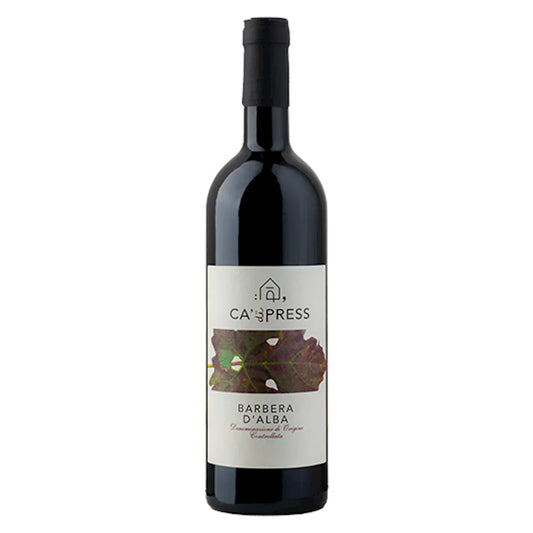
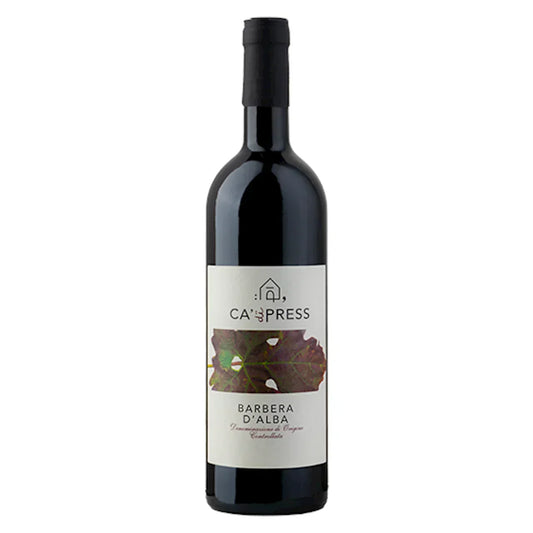
Barbera is the more popular of the two dark grapes. It gives wines with marked acidity but relatively soft tannin, and that makes them easy to drink and excellent with food. Where Nebbiolo demands patience, Barbera often offers juicy fruit already in its youth.
Dolcetto
Dolcetto means something like 'the little sweet one', but the wine is dry. The name refers rather to the grape's amiable character. Dolcetto gives round, fruity red wines with low acidity and soft tannin, conceived as an everyday wine, drunk young and without fuss.
Barolo, Barbaresco and Alto Piemonte
When Nebbiolo truly unfolds, it happens in two appellations in Langhe that lie quite close to one another but each have their own profile.
Barolo
Barolo is regarded as the most complete expression of Nebbiolo. The wines are powerful, rich in tannin and built for many years in the bottle. In their youth they can seem tight and closed, but with time they develop a complexity and finesse that rewards the patience.
Barbaresco
Barbaresco is made from the same grape and resembles Barolo in spirit, but is often perceived as a touch more elegant and a little earlier to become accessible. The differences between the two stem from soil, location and local tradition rather than from the grape itself.
Both appellations are characterised by many small producers. A typical Barolo or Barbaresco vineyard is quite small and yields a modest number of bottles a year, and there are more than 800 bottlers in the region. That says a great deal about the fine-meshed, family-marked structure that makes each village and each hillside a little world of its own.
Alto Piemonte
Further north you find Alto Piemonte, where Nebbiolo again plays the leading role, but often under other local names and in a cooler climate closer to the Alps. The wines from here tend to have a slightly slimmer, cooler profile than the mighty southern models and are worth discovering if you already love Nebbiolo.
How the wines taste
Nebbiolo's great paradox is that it gives light, almost translucent wines that are nonetheless among the most powerful you can encounter. The colour is often a pale ruby with a tendency towards orange at the rim, while taste and structure are anything but slight.
Aromatically, Nebbiolo is often associated with roses, cherries, tar and herbs, frequently with a touch of something earthy reminiscent of the region's autumn fog. In the mouth it is the acidity and the firm tannin that carry the wine, and that over time melt together into something softer and more harmonious. Many of the wines spend some months, often longer, in cask, which adds spicy and slightly nutty notes.
Barbera wines taste more forward and juicy with fresh acidity and dark fruit, while Dolcetto is round and immediate with soft fruit. Together the three grapes cover the whole spectrum from the light everyday wine to the deep, ageworthy classic.
In brief
- Piemonte lies in northwestern Italy at the foot of the Alps and has a mainland climate and 52 DOC zones, more than any other Italian region.
- Nebbiolo is the region's noblest grape, known for high acidity, powerful tannin and long ageing ability.
- Barbera and Dolcetto give more immediate everyday wines with fresh acidity and soft fruit respectively.
- Barolo and Barbaresco are Langhe's two great Nebbiolo appellations, made by many small producers.
- Nebbiolo wines are often light in colour but powerful in taste, with aromas of roses, cherries and tar.
Frequently asked questions
What is the difference between Barolo and Barbaresco?
Both are made from Nebbiolo and resemble one another in style. Barolo is typically perceived as the most powerful and most ageworthy, while Barbaresco often seems a touch more elegant and accessible a little earlier. The differences are due to soil, location and local tradition.
Why are Nebbiolo wines so light in colour when they taste so powerful?
Nebbiolo gives relatively little colour to the wine, but plenty of tannin and acidity. So you may encounter a wine that looks slight in the glass but is built for many years of ageing and fills the mouth well.
Ready for the next step?
From Piemonte's misty hills the journey continues south to another of Italy's great regions. In the next part we explore Toscana: Sangiovese and the Tuscan classics, where an entirely different grape sets the agenda.
If you fancy tasting your way into Piemonte, you can safely begin with a Barbera or Dolcetto before you take on a Barolo. And remember that the best combination is always the wine you like with the food you love. Enjoy exploring.