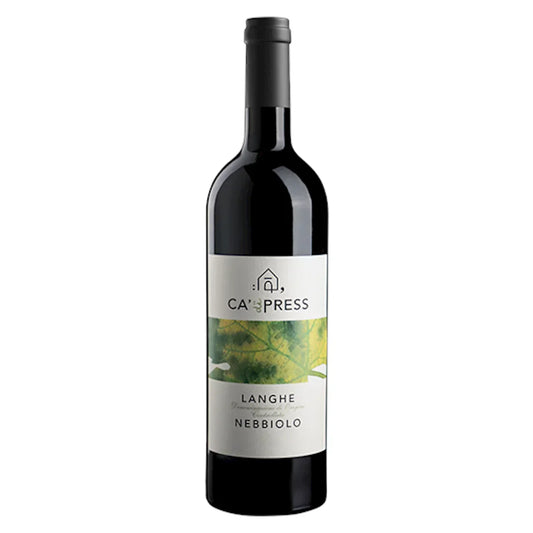

Welcome to part 8 of our series Wine's great grapes. After travelling through both white and dark classics, we have arrived at a grape that, for many wine lovers, is the very embodiment of Italian greatness. Nebbiolo is grown on a limited scale and rarely lets itself be persuaded to thrive outside its north-western corner of Italy, but it is precisely there that it produces some of the world's most fascinating red wines.
Nebbiolo is a grape that asks something of you. It is pale in colour, high in tannin and acidity, and it rewards patience. In return, it opens up a universe of aroma and finesse that few other grapes can match. Let us take a closer look at what makes Piedmont's king so special.
What you will learn
- Where Nebbiolo comes from, and which regions are the grape's homeland
- How to recognise Nebbiolo's characteristic tannin, acidity and aroma
- What sets Barolo and Barbaresco apart, and why ageing matters so much
- Which foods suit Nebbiolo best, and how to serve it
Where Nebbiolo comes from
Nebbiolo has its roots in north-western Italy, first and foremost in Piemonte, but also in Lombardia (especially Valtellina) and in Valle d'Aosta. It is a grape with a long history in the area. The earliest documented mention in the literature goes all the way back to 1268, which tells you something about how deeply rooted it is in the local wine tradition.
The name itself is thought to derive from the Latin 'nubiola', meaning fog. This may refer to the fact that the grape ripens late in the season, when autumn fog often lies over the vineyards, or to the fine dusting of wax that covers the berries. As a typical grape from cooler growing conditions, Nebbiolo ripens late and is harvested in the autumn.
One thing is worth noting: Nebbiolo is unusually sensitive to soil and microclimate. It expresses its terroir, that is the interplay of soil, climate and location, with great precision. This is also why the grape has such difficulty producing comparable wines elsewhere in the world. Its home is in Italy.
How Nebbiolo tastes
If you encounter Nebbiolo for the first time, the colour may surprise you. Despite producing full-bodied red wines, the hue is often relatively light with a garnet-red glow, and even young wines can have an orange-red tint at the rim. Do not be fooled: a garnet tone does not necessarily mean the wine is old. It is simply the nature of the grape, which has a modest content of colour pigments compared to many other dark grapes.
What truly characterises Nebbiolo is the structure. The grape has a high content of tannin, the substances from the skins and pips that give that slightly puckering, drying sensation on the tongue. Together with a fresh, prominent acidity, this produces wines with great grip and an ability to develop over many years.
On the aroma side, Nebbiolo is both complex and recognisable. Think red berries such as cherry and raspberry, but also a characteristic play of roses, tar, spices and herbs. With time in the bottle, the wine often develops more mature, earthy notes. It is this combination of light colour, powerful structure and fragrant complexity that makes Nebbiolo an experience in its own right.
Barolo, Barbaresco and ageing
Nebbiolo is the grape behind two of Italy's most esteemed red wines: Barolo and Barbaresco. In their purest form, both are made exclusively from Nebbiolo, and both come from Piemonte. The differences between them are mostly about location and style, where Barbaresco is often regarded as a touch more accessible in its youth, while Barolo tends to appear with even more power and structure.
What they have in common is that they are built for ageing. The high content of tannin and acidity acts as a kind of preserving backbone, which allows the wines to develop over many years. In their youth, the tannin can seem tight and almost unyielding, but with time it softens, and the wine unfolds its aromatic complexity.
Traditionally, these wines spend a period in barrel, which contributes to both structure and aroma. Oak adds its own phenolic compounds to the wine and helps shape its development over time. The result is red wines that often only truly show their best side after a number of years in the cellar. If you open a young Nebbiolo-based wine, it can well be worth decanting it and giving it a little air.
Classic regions and styles
Although Barolo and Barbaresco are the most well known, Nebbiolo is not limited to them. In Piemonte, the grape also appears in wines such as Gattinara, Ghemme, Lessona and Boca, where it sometimes stands alone and at other times is blended with local grapes. It is worth knowing that Nebbiolo goes by several names depending on the area. It is called Spanna in parts of northern Piemonte, among other names.
In Lombardia, more specifically Valtellina, the grape is known as Chiavennasca. Here both dry red wines and a more concentrated style are made, where partially dried grapes give fuller-bodied wines. In Valle d'Aosta, Nebbiolo appears in appellations such as Carema and Donnaz, often in a slightly lighter style shaped by the cool mountain climate.
A terroir-sensitive head of the family
Nebbiolo is genetically related to several local grapes, including Freisa and Vespolina, and in Valtellina there is a whole family of closely related varieties. The grape's strong sensitivity to soil and microclimate means that the same grape can produce markedly different wines from vineyard to vineyard. It is precisely this quirk that makes it so rewarding to explore Nebbiolo across different regions.
How to drink Nebbiolo
Nebbiolo's combination of powerful tannin and high acidity makes it an excellent companion to food that has a little richness and body to offer. The tannin binds beautifully to fatty and protein-rich dishes, while the acidity keeps the flavour fresh and inviting.
Think in terms of classic, warming dishes: braised meat dishes, game, tender beef and mushrooms. Truffles are a well-known regional speciality in Piemonte, and their earthy aroma plays nicely with a mature Nebbiolo. Mature, firm cheeses can also work well. For everyday meals, the grape suits a hearty pasta dish or a slow-roasted dish with a good sauce.
When it comes to serving, Nebbiolo benefits from a proper glass and a temperature around ordinary cellar coolness, that is, not too warm. A younger wine almost always benefits from breathing in a carafe, so the tannin has time to settle into place.
In short
- Nebbiolo comes from north-western Italy, especially Piemonte, and expresses its terroir with great precision.
- The grape produces wines with a light, garnet-red colour, high tannin, fresh acidity and aromas of red berries, roses, tar and spices.
- It is the grape behind Barolo and Barbaresco, two age-worthy red wines that often spend time in barrel.
- Nebbiolo also appears under names such as Spanna and Chiavennasca in other Piemontese and Lombardian wines.
- At the table, it suits full-bodied, warming dishes such as braised meat, game and mushrooms.
Frequently asked questions
Why is Nebbiolo so light in colour when it is so powerful?
Nebbiolo has a relatively modest content of colour pigments compared to many other dark grapes. That is why the wine often appears light and garnet-red, even in a young and structured wine. So the colour does not say much about either power or age.
Does Nebbiolo always need long ageing?
The great Barolo and Barbaresco typically gain from a few years of ageing, because the tannin softens over time. But there are also lighter styles that can be enjoyed younger. If you open a young and tight wine, it helps to decant it.
Ready for the next step?
Now you have a handle on Piedmont's king and its majestic tannin. In the next part of the series, we travel south to Toscana and meet a grape that is the very heart of the region's red wines: Sangiovese: The heart of Tuscan red wine.
To taste the grape's different styles, explore our Barolo and other Nebbiolo wines. And remember that the best combination is always the wine you like with the food you like. The rest is simply a cosy occasion to explore.