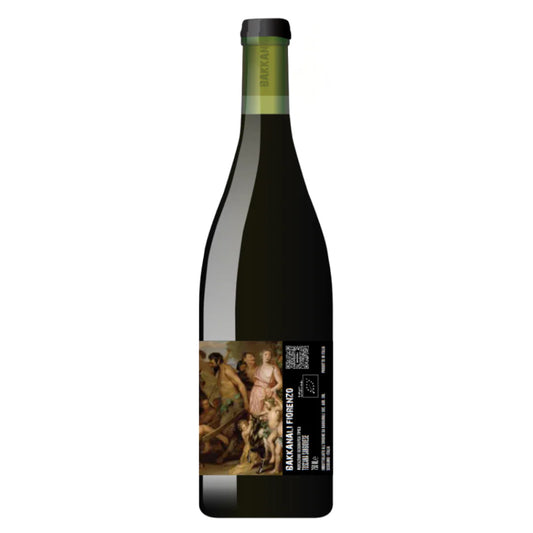

Welcome to the ninth and final part of the series The Great Grapes of Wine. We finish where many Italian wine journeys begin, namely in Toscana. Sangiovese is the heart of Tuscan red wine, and once you understand this grape, you open the door to names like Chianti and Brunello di Montalcino.
In many ways, Sangiovese is a grape that rewards patience and curiosity. It is rarely flashy at the first sip, but it has a fresh acidity and a springiness that make it one of the most food-friendly red wines you can have in your glass. Let us take a closer look at where it comes from, how it tastes, and what to serve with it.
What you will learn
- Where Sangiovese originates from, and where it is grown today
- How to recognise the grape's fresh acidity, firm tannins and aroma
- What role Sangiovese plays in Chianti, Brunello and other Tuscan styles
- What Sangiovese pairs with at the table
Where Sangiovese comes from
Sangiovese is a blue grape with its roots in Toscana in central Italy. It has been grown here for many centuries, and there are traces of cultivation going all the way back to the 1300s. Today Toscana is still the grape's most important homeland, but it also thrives in the neighbouring landscapes of Umbria, Marche and Lazio.
Outside Italy you will find Sangiovese planted in places such as California, Argentina, Australia and France, but it is in Italy that the grape truly shows its real expression. It appears under several local names, among them Brunello and Morellino, which can seem confusing, but it is the same grape in different disguises.
Sangiovese ripens late and needs warm growing conditions to reach its full maturity. DNA analyses point to a possible kinship with the grape Ciliegiolo, which helps explain the grape's cherry-like character.
How Sangiovese tastes
If there is one thing you should remember about Sangiovese, it is this: fresh acidity and firm tannins. These two elements give the grape its characteristic springiness and make it so well suited to food.
On the aroma side you will often meet fresh, red cherries and plums, gladly with a herbal, earthy undertone and a hint of dried herbs. The alcohol typically sits at a moderate level, and the wine is usually dry. In its purest form Sangiovese can have a slightly metallic or mineral finish, which some experience as part of the grape's charm.
The style varies quite a bit depending on the clone and the winemaking. Sangiovese can give everything from light, fresh and crisp red wines to fuller and more concentrated versions that benefit from a few years in bottle and barrel. Several of the most serious expressions benefit from ageing before they show their best side.
Chianti, Brunello and Tuscan styles
Sangiovese is the leading grape in three of Italy's most famous red wines: Chianti, Brunello di Montalcino and Vino Nobile di Montepulciano.
In Chianti, Sangiovese often appears in the company of other grapes. Traditionally it has been blended with the likes of Canaiolo and Malvasia Nera, which can give a slightly rounder and more approachable style. The result is often a fresh, food-friendly red wine with a clear cherry character.
In Brunello di Montalcino, Sangiovese takes the leading role entirely on its own. Here the grape appears under the local name Brunello, and the style is typically more concentrated and capable of ageing. These are wines that often benefit from extended ageing before they unfold completely. Vino Nobile di Montepulciano is a third classic Tuscan style, where Sangiovese is again at the centre.
From light to full-bodied
The point is that Sangiovese is not one fixed flavour, but a starting point. The winemaker's choices, the grape's clone and the ageing determine whether you get a light and crisp everyday wine or a deep, structured wine for the big occasions.
Classic areas and styles
If you want to explore Sangiovese, Toscana is the natural place to begin. Here you will find both the fresh, fruit-driven styles and the more serious, ageworthy versions. In Umbria, Marche and Lazio you will meet variants that often have a slightly more rustic and earthy character.
A good piece of advice for the experienced wine drinker: taste your way through different Tuscan areas side by side. You will quickly discover how terroir, that is the interplay between soil, climate and location, leaves its mark on the same grape. The fresh acidity and cherry character recur, but the expression changes character from area to area.
Many Sangiovese wines have also seen the barrel, and here you can experience how time on oak adds a softer texture and notes of spice and vanilla that play up against the grape's natural freshness.
How to drink Sangiovese
Sangiovese is born for the dinner table. The fresh acidity is a gift to food, because it cuts through richness and refreshes the palate between every bite. Think of Italian cuisine in the broad sense: pasta with tomato-based sauces, pizza, lasagne, grilled meat and aged cheeses.
It is precisely the acidity of the tomato that is a classic challenge for many red wines, but here Sangiovese meets it on equal terms. This is one of the reasons the grape pairs so naturally with Tuscan cuisine.
The serving temperature matters quite a lot. A light, fresh Sangiovese benefits from being served a touch cooler than room temperature, while a fuller and aged version can stand to be a bit warmer. For the younger, fresh styles you rarely need to decant, while the more concentrated wines can benefit from a little air in the glass or carafe.
In short
- Sangiovese is a blue grape originating in Toscana, where it still has its most important homeland.
- It is characterised by fresh acidity, firm tannins and aromas of red cherries and plums.
- The grape is the driving force in Chianti, Brunello di Montalcino and Vino Nobile di Montepulciano.
- The style ranges from light and crisp to full-bodied and ageworthy depending on the clone and winemaking.
- The fresh acidity makes Sangiovese an excellent companion to tomato-based dishes and Italian food in general.
Frequently asked questions
Are Chianti and Sangiovese the same thing?
Not quite. Sangiovese is the grape, while Chianti is a Tuscan area and a wine style where Sangiovese is the leading grape. In Chianti, Sangiovese is often blended with other grapes such as Canaiolo and Malvasia Nera.
Why does Sangiovese taste so fresh?
It is due to the grape's naturally high acidity. Together with the firm tannins, this gives a springy and food-friendly wine that refreshes the palate and plays nicely with acidic dishes.
Ready for the next step?
With Sangiovese we round off the series The Great Grapes of Wine, but your own journey has only just begun. If you fancy comparing a fresh, aged red wine with a more robust one, you can dive into Nebbiolo, the king of Piemonte, or return to the earlier instalments on, for example, Pinot Noir and Cabernet Sauvignon.
The best way to get to know a grape is to pour a glass and taste, preferably together with a dish you love. Remember that the best combination is always the wine you like with the food you like. Explore our Chianti Classico or the broader selection of Tuscan wines, and find a wine for your next meal.