
-

Grifalco Gricos Aglianico del Vulture DOC 2023
Regular price €19,95 EURRegular priceUnit price per -

Grifalco Aglianico del Vulture DOC 2022
Regular price €23,95 EURRegular priceUnit price per -
 94 POINTSOrganic
 Italian agriculture
IT-BIO-004
Italian agriculture
IT-BIO-004
Grifalco Damaschito Aglianico del Vulture Superiore DOCG 2021
Regular price €34,95 EURRegular priceUnit price per -
 95 POINTSOrganic
Italian agriculture
IT-BIO-004
95 POINTSOrganic
Italian agriculture
IT-BIO-004
Grifalco Daginestra Aglianico del Vulture Superiore DOCG 2021
Regular price €34,95 EURRegular priceUnit price per


Aglianico del Vulture with volcanic depth and precision
Region and landscape
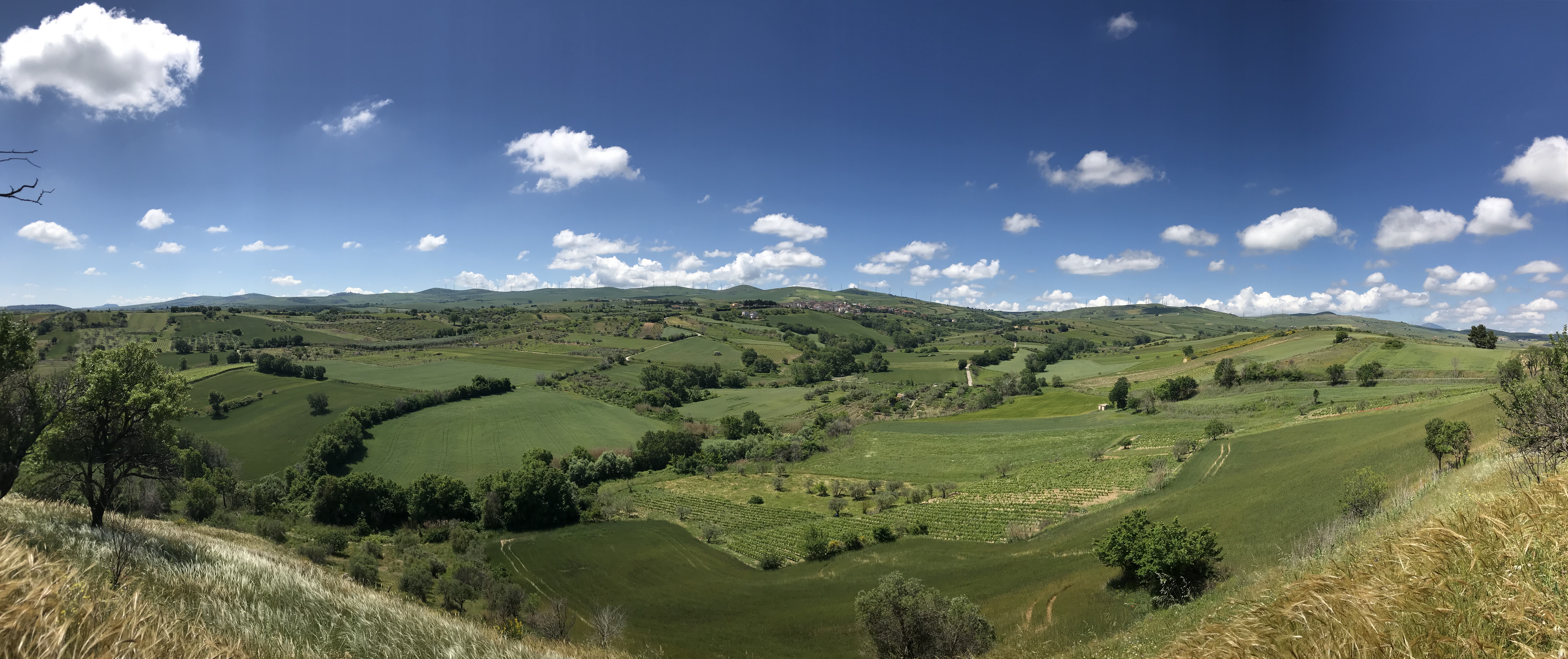
Grifalco is located on the slopes of the extinct volcano Monte Vulture in the Aglianico del Vulture DOC appellation. Here, in northern Basilicata, some of Southern Italy's most characterful red wines are grown on dark, mineral-rich, and volcanic soil at altitudes of up to 600 meters.
Basilicata is a small region in southern Italy - roughly like the instep of the Italian boot - characterized by mountains, forests, and a more rugged and dramatic landscape than many associate with Southern Italy.
Aglianico del Vulture takes its name from the extinct volcano Monte Vulture, which dominates the landscape in northern Basilicata. The most sought-after vineyards are high on the volcano's slopes, often with eastern exposure. Although we are far south in Italy, the altitude and cooler nights ensure that the grapes ripen slowly and retain their freshness – so the wines gain structure and balance rather than overripeness.
History and family
Grifalco was founded in 2004 by Cecilia and Fabrizio Piccin after more than 20 years as producers of Vino Nobile di Montepulciano in Tuscany. They wanted to work even more focused with one grape and one terroir - and the choice fell on aglianico, considered the most important red grape variety in Southern Italy.
Today, it is their sons Lorenzo and Andrea who continue the project. Lorenzo is a trained oenologist from Alba, Piedmont, and is responsible for the vineyard and cellar, while Andrea handles the more commercial side.
The grape and expression
Aglianico is often called “the Barolo of the South” - not only because of its marked tannin bite and high acidity but also because it can combine power and elegance with significant aging potential. In Vulture, it also gains a dark, almost graphite-like minerality that is entirely its own. The combination of the heights and the volcanic subsoil gives wines with both structure and tension - and with a depth that places the area among the most serious in Southern Italy.
The name Grifalco combines the family's roots and their new home: the griffin from Montepulciano and the falcon from Monte Vulture. It is a symbol of both continuity and renewal.
Vineyards and soil
The estate comprises 16 hectares of organically cultivated vineyards spread across the municipalities of Maschito, Forenza, Ginestra, and Venosa, where the cellar is also located. The vineyards are between 450 and 580 meters above sea level and contain vines from 10 up to 80 years old.
The soil is predominantly volcanic but varies significantly from parcel to parcel. In Damaschito, the soil is sandy with clear elements of iron and manganese, which give the characteristic reddish color and contribute to the wine's structure and depth. In Daginestra, the subsoil is characterized by volcanic ash mixed with limestone and clay, which gives a grayish soil and a cooler and tighter minerality in the wines.
Vinification and production
All work is carried out organically with a focus on minimal intervention – without the use of cultured yeast, without filtration, and with vinification in a naturally ventilated winery, where classic principles are followed. Each parcel is harvested and vinified separately to preserve its uniqueness. In the cellar, a combination of Slavonian, French, and American oak as well as stainless steel tanks are used, always with a focus on preserving the grape's structure and the area's expression and on taming aglianico's natural tannins without removing its character.
Approximately 70,000 bottles are produced annually - exclusively based on aglianico.
Style and character
Grifalco's wines are full-bodied and structured with ripe tannins, clear acidity, and a distinct volcanic minerality. The tannins are firm but balanced, and the fruit moves in the dark spectrum with cherry, plum, and spices, often accompanied by a slight smoke and ash tone from the volcanic soil.
These are wines with excellent aging potential - and with a clear imprint of their volcanic origin.
Grifalco at Copenhagen Wine
For us, Grifalco is a strong example of how precise and terroir-driven Aglianico del Vulture can be. These are wines with structure, minerality, and aging potential - and with a clear and honest expression of Monte Vulture's volcanic soil.